
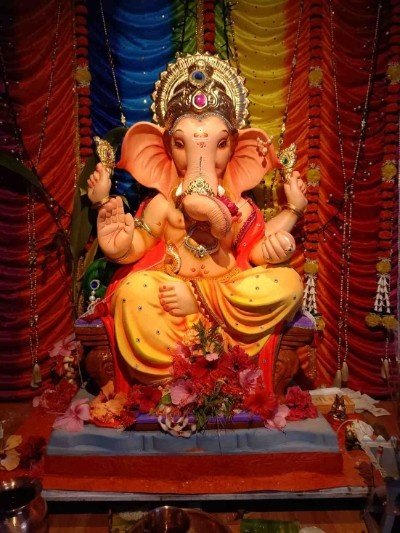
Making a Ganesha idol is a sacred and artistic process. Whether for personal devotion, community celebration, or commercial purposes, the following important aspects must be considered:
🛕 1. Spiritual & Religious Aspects
- Iconography Accuracy: Ensure traditional features like elephant head, broken tusk, potbelly, mouse (vehicle), modaks, and four arms holding symbolic items (lotus, axe, etc.).
- Shastra Guidelines: Follow traditional scriptures like Shilpa Shastra or Agama Shastra for proportions and postures (like Lalitasana or Abhayamudra).
- Direction Facing: Traditionally, the idol should face east or west.
- Trunk Position:
- Left-side trunk (
Vamamukhi) – more common, peaceful. - Right-side trunk (
Dakshinmukhi) – considered more strict and powerful; requires special rituals.
- Left-side trunk (
🌿 2. Materials Used
| Material | Eco-friendly? | Notes |
|---|---|---|
| Shadu clay (natural clay) | ✅ Yes | Traditional, biodegradable, dissolves easily in water. |
| Paper mache | ✅ Yes | Lightweight, customizable, biodegradable. |
| Cow dung and natural clay mix | ✅ Yes | Organic, sacred in Hindu rituals. |
| Plaster of Paris (POP) | ❌ No | Non-biodegradable, pollutes water, banned in many places. |
| Plastic or resin | ❌ No | Harmful to environment, not recommended. |
🔔 Tip: Use natural colors (haldi, kumkum, geru, or food-grade colors) for painting instead of chemical paints.
🎨 3. Artistic Design
- Size & Weight: Depends on home or mandal space, transport logistics, and immersion method.
- Detailing: Focus on expressive features—eyes, smile, ornaments.
- Theme or Pose: Traditional (sitting, standing) or creative poses (dancing, eco-themed) must retain core symbolism.
- Base Stability: The base must be wide and strong enough for balance and safety.
🌊 4. Immersion (Visarjan) Planning
- Prefer idols that dissolve quickly and completely.
- For home use, consider artificial ponds or bucket immersion.
- Avoid materials that release toxic chemicals or microplastics.
♻️ 5. Sustainability & Regulations
- Follow local environmental regulations (many cities ban POP).
- Encourage reusable metal or stone idols for non-immersive worship.
- Promote seed Ganesha idols that grow into plants after immersion.
👥 6. Community & Cultural Sensitivity
- Be inclusive with designs and avoid controversial or commercial symbols.
- Avoid incorporating non-Hindu or commercial elements (e.g., brand logos).
- In community mandals, ensure the idol aligns with local traditions and sentiments.
🔧 7. Practical Factors
- Transport Safety: Strong structure to avoid cracks or collapse.
- Moisture Sensitivity: Especially for clay idols—keep in dry, shaded place.
- Fire Safety: Avoid highly flammable decorations.