
Ganesh Chaturthi is one of the most vibrant and significant festivals in India, particularly in Maharashtra. While the worship of Lord Ganesha dates back to ancient times, the public celebration through Sarvajanik (community) Ganesh Mandals has a specific historical and socio-political origin.
📜 Ancient Roots of Ganesh Worship
- Lord Ganesha has been worshipped in India since the Gupta period (4th century CE) and possibly earlier.
- Scriptures like the Rigveda, Puranas, and Mudgala Purana mention him as the remover of obstacles, god of wisdom, and the patron of arts and learning.
- However, Ganesh Chaturthi as a large-scale public festival is a relatively modern phenomenon.
Revival by Bal Gangadhar Tilak (1893)
🔥 Turning Religion into Resistance
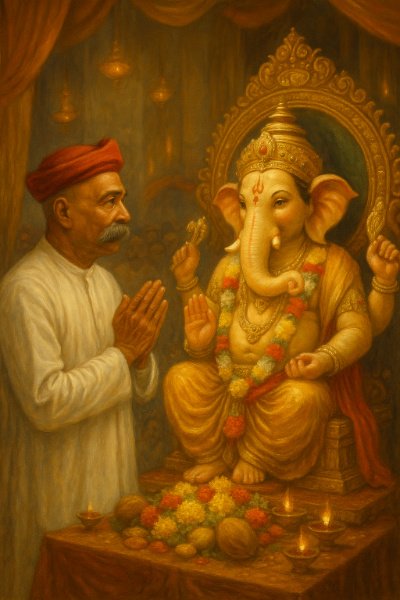
- The public celebration of Ganesh Chaturthi was revived and popularized by Lokmanya Bal Gangadhar Tilak in 1893 during British rule.
- At that time, the British had banned public gatherings to prevent nationalist movements.
- Tilak realized that religious gatherings could bypass colonial restrictions, so he used Ganesh Chaturthi as a tool of political awakening.
- He encouraged Sarvajanik Ganeshotsav Mandals, where neighborhoods would host community idols, organize lectures, patriotic songs, and social reform discussions.
🏙️ Growth of Ganesh Mandals in Mumbai
1900s–1940s: The Foundation Years
- The first mandals began forming in old localities like Girgaon, Parel, and Lalbaug.
- These were working-class neighborhoods, especially home to mill workers, making Ganeshotsav a symbol of unity and worker solidarity.
- Processions and community participation turned these events into yearly cultural landmarks.
1950s–1980s: Rise of Traditional & Cultural Mandals
- Mandals like Lalbaugcha Raja (1934) and Ganesh Galli (1928) became crowd favorites.
- Artistic competitions, drama performances, and spiritual discourses became integral.
- Many mandals began preserving regional traditions, such as Marathi kirtans, folk dances, and village-style pandals.
1990s–Present: Modernization & Mass Appeal
- With TV coverage and sponsorships, the scale of celebration exploded.
- Themes began to include social issues, mythological dioramas, and even global awareness topics.
- Innovations like eco-friendly idols, drone coverage, and digital darshan became popular.
🎉 Historic Importance of Ganesh Mandals
1. Cultural Unifier
Ganesh mandals brought together people of different castes, economic backgrounds, and political views to participate in one shared event.
2. Platform for Social Reform
Since the early 20th century, mandals have been used to educate the masses, promote hygiene, discourage untouchability, and later, support Swadeshi and independence movements.
3. Political Relevance
Ganeshotsav has historically reflected local political undercurrents, with politicians often supporting or associating with major mandals for visibility.
4. Economic Catalyst
It’s a major boost for artisans, decorators, idol makers, florists, and small businesses—often sustaining thousands of livelihoods annually.
🪔 Today’s Mandals: A Fusion of Devotion, Art & Activism
Modern Ganesh mandals are community-run cultural institutions, balancing:
- Devotion and grandeur
- Traditional rituals and modern themes
- Spirituality and social messaging
🧠 Did You Know?
- The tallest ever Ganesh idol in Mumbai was over 40 feet high.
- Some mandals, like GSB Seva Mandal, insure their idols for ₹300+ crore due to the precious ornaments.
- Themes have ranged from Ayodhya Ram Mandir, ISRO launches, to eco-conservation and COVID awareness.
Ganesh Chaturthi mandals are not just religious centers—they’re living expressions of Mumbai’s soul: resilient, creative, united, and full of devotion.